Thursday, November 17, 2011

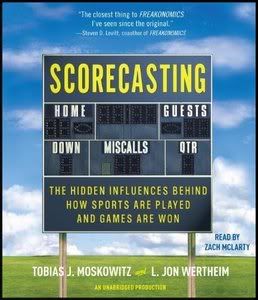
SCORECASTING, examination of tactics


Just finished a great new book titled SCORECASTING about using data to quantify many tactics and held believes in the world of sports. Much like MONEYBALL or FREAKONOMICS, the two authors, Tobias Moskowitz and L. Jon Wortheim explore different strategies coaches use and put them under the microscope of data to examine if there decision making holds up proven numbers of successful or unsuccessful outcomes. The book examines many sports from baseball, football, basketball as well as hockey. Many of the findings will not be that surprising or possibly verify some believes you might have had before of where tactics don't seem to make that much sense. If anything the book will open your eyes to viewing tactics will a more critical eye.

For coaches, the book will most likely stimulate you to examine or contemplate new ways to strategize with your teams. Like any book that attempts to use pure numbers to quantify a multi-faceted event like sports, it's mostly impossible to predict outcomes on a regular basis; something the authors fully explain. However, it will open your eyes to many statistics on tactics that might change the way you view different games. One of my favorite examinations was the gospel line that defense wins. For years, I have believed this supposed truism to be greatly over inflated; the authors came to pretty much the same conclusion. Their explanations on this topic though are well worth reading.

All in all, the book is a very easy read and well worth picking up.

Saturday, January 8, 2011

Tactical Awareness Game (TAGs) #3 Transition Game


Seeing that the hallmark of most top teams is their ability to transition from defense to offense or the opposite in a quick and organized manner this game is a great one to build this into your team's training. This game is also one that builds a lot of confidence for you players and for youth players, is a great game to highlight the creative side of the game. With youth players, the best way to start out this game is to focus totally on offense and try to encourage your players to move up ice as pass options as quickly as possible. As they grasp this concept you can add some guidelines for them to work with a better shape where the players spread out in a more organized fashion. This game like most TAGS can also be used at all levels, but with more defined structure with more mature players.

First off, the rules of the game. #1 The goals are placed with one on the goal line, one in it's normal spot and the other on either the center of the red or far blue line. Each team attacks the goal at the far end. #2 This game is usually played 3 v 3 but can be played 2 v 2, 4 v 4, 3 v 2, 4 v 2 or other combos that might fit the number of players you have or tactic you want to emphasize. (Something to consider at the youth level is to find ways to push all your players to higher levels with different number combos in many of your TAGS. An example of this is to at times play your top two players against your next 3 most talented players. This will stress both these groups, as the team of two will be under increased pressure and the team of three will be pushed as well).

#3 The goal line and red or blue line define the playing area for this game. #4 Any puck that goes below these lines is dead and a coach puts a new puck into play to the team that is going in the opposite direction ie. simulating a turnover where the team transitions as quickly as possible to get open and up ice before the defending team can get organized defensively. #5 The players not in the game wait on their perspective goal lines on an opposite diagonal ( a coach with a good supply of pucks is also positioned on each goal line to put new pucks into play). The shifts which are usually about 25-35 seconds are changed on a whistle and if a puck is still in play it becomes the puck used for the new players entering the game. Try to change at times where the players in the game have an easy time to leave the playing area while the new players jump into action. #6 The last rule is that a puck frozen by a goaltender or scored is also out of play and a new puck is again put in by a coach at that end to his their team going in the opposite direction. You can also put a rule in place when the players start to grasp the game where the team that scores is rewarded by skating back towards their defending goal and their coach passing to one of their players.

Like all TAGS the coach plays a vital role in stopping the game at various times to point out great plays or players making positive adjustments. You also need to point out ways they need to change for increased success or plays that they to take out of their play as they will not be effective. You can also change the focus of the game by teaching them better ways to spread out offensively (an example is to emphasize two players getting wide and having one in the middle). Other changes might be encouraging players to use their coach as a regroup option when going immediately forward might be defended tightly. Also as you players get better offensively you can emphasize a better understanding on defensive play. However, this defensive mindset (in my mind) is better utilized when the players have learned transition from defense to offense effectively and players have grasped the understanding of moving the puck quickly and working hard without the puck.

Wednesday, December 8, 2010

Keeping players safe and lessons learned


Had the pleasure of officiating a number of game over the weekend. There were some well coached teams and some that were still a work in progress, but seemed to be focusing on more long term development; which was nice to see. This post is about a team with a focus that is all to often missing the boat on where the coaching staff needs to lead their team on so many fronts.

This group is in it's first year of checking hockey and like many coaches with a new tool they can implement, it has become the most important tool in their arsenal. My guess is the coaches would not be aware of just how much focus they have put on this area and it's not that they are not encouraging many other positive aspects of the game, like moving the puck and playing with speed. The struggle with this particular group is how they, probably without realizing it, put so much weight and importance on hitting. They do this in many ways that don't work in the kids best interests. Like many coaches, they start out with encouraging the players to "take the body" in the course of the early play. This starts out fine, but as the game proceeds it becomes a larger demand from the bench and pretty soon the earlier encouragements turn into heated emotional yelling from the bench to the on ice players and big demands on the bench, that they follow thru with this tactic when the get back out there.

Added to this increase in emotion from the coaches, is their increased inability to think clearly and deal with the inevitable penalties that their team will be given for illegal hits. Keep in mind that these new checking players are still very much trying to figure out how to make effective hits, how to absorb hits and what is legal and illegal on this front. The players are novices in this area, where as the coaches are have most likely been exposed to hitting as coaches or former players for a number of years. I realize for many different reasons and different experience levels that many coaches will have varied prospectives on what legal and illegal hitting might be. However, in my mind, there is absolutely no excuse for any adult behind the bench at this point and time to not be aware that their number one job is to do all they can to make sure their athletes are safe and the athletes on their opposing team are equally safe. I apologize ahead for this post for it's lecturing tone, but unfortunately this topic is far to important to be treated with kid gloves or politically correctness.

Just in case these coaches missed the last 10-15 years of athletics and not just in hockey, there has been a huge push in eliminating, as much as possible, the number of violent hits. The kind of hits that have left far to many athletes injured to the point where they miss large parts of their season, career or even worse hamper them for the rest of their lives outside of sports. We all know stories of some athletes that were not even lucky enough to have just suffered the above struggles. Getting back to the team that inspired this post though. Somewhat early in the contest one of their players found an opponent, head down, trying to control the puck in the neutral zone. With his head bent forward and not moving much at all, the checking player stepped into him with decent speed and delivered a shoulder check that in many circumstances would have been legal. The problem though was that he delivered his shoulder squarely into the defenseless players head, knocking him hard to the ice and partially removing his helmet. The player needed a number of minutes before he was helped to his feet.

The checking player's coaches were infuriated that we gave him a penalty (which was a major) for a hit that they considered to be perfectly legal. Of course, I went over and explained the reason that hits to the head have been not only ruled illegal, but become maybe the biggest emphasis of not only youth hockey, but college hockey, the NHL, college and pro football etc. For these coaches to defend this play, in this day an age, is absolutely stunning to me, but more importantly these coaches need to educated quickly on just how damaging these hits can be if they were not already aware of it. Additionally, these coaches must be brought up to speed (they are being emailed) on how constantly defending your players when they are penalized for illegal play is the surest route possible that they will not learn the lesson and make adjustments. They will also quickly learn to emulate the same contempt that they have for officials that they do and in a short period begin to show the same disrespect for officials that they do. Having been on all sides of the official/hockey participant relationship, I'm well aware just how difficult it is to control you emotions at times. Hopefully though, you as the adult, have the aha moment where you realize that wigging it on the bench is really not in anyone's best interest and certainly not in your youth players best interest at any level. This is especially difficult, as all of us regularly watch professional sports where abusing officials is not only prevalent, but often shown on replay with the best possible angles to highlight the anger. This behavior however, has no place in youth sports where the athletes emotional and developmental needs must be the focus rather than winning a game or argument.

As officials, we are fully aware that we do not get every call right, will miss some situations that most everyone else saw and at times, downright blow a call. As a coach, as hard as it is to swallow these moments, this can be a huge teachable moment for your young athletes. Just think back to this summer's potential perfect game by Tiger's pitcher Armando Galarraga being lost when umpire Jim Joyce missed the call. Sure we all remember the call, but the real takeaway from the whole story was the incredible restraint and understanding that Galarraga demonstrated. Unlike most athletes in that situation, he showed class and handled the situation with dignity and also forgave the umpire for his mistake. If only more people had that capacity for restraint; not only would hockey be better served, but the world would be a better and safer place than it is today.

Thursday, November 4, 2010

Great interview with New Tampa Bay Coach

Here's a 7 min plus interview with new Tampa Bay coach, Guy Boucher. He hits on a lot of topics and ideas this blog is promoting. Well worth watching if only for his philosophies on empowering his team. Enjoy !!!

Spacing, the final frontier !!!!


The title for this post is far to cliche, but in may ways spacing in the game of hockey is not only the final frontier, but it, in many ways, is the most critical area for success by a team. By spacing, I mean how your players are spaced out over the rink in the numerous facets of the game. A lot of folks have an understanding about this concept, but gaining an in depth understanding of how effective spacing can add to you team's play and success is the goal of this article.

First off, lets start with a couple of basic concepts that are the hallmark of teams that make sure their opponents have a difficult time playing against them. I remember a number of years ago attending a coaching clinic with presenter and former coach of the Jersey Devils, John Cuniff talking about the Devils philosophy about the neutral zone trap. I've never been a big fan of the trap, especially at the younger ages, but knew full well why it was so effective and why coaches loved it. Luckily, for the game with the rule changes, better skills and better spacing, the game has progressed to where the trap is not nearly the game changer than it was in the early 90's. Coached Cuniff started out his talk with reverencing the famous Sun Tzu book, the Art of War. This book was written as a guide on how to wage war. It touches on numerous ideas on not only military tactics, but the psychology and philosophy of successful tactics. It's ideas have been cited to have had impact in the world of politics, as well as, business. Needless to say, it was an easy transfer into the realm of sports.

Coach Cuniff pointed out that one of Sun Tzu's guiding principals on winning wars, was having the ability and knowledge of when and where to fight your battles. This mentality was, in his mind, the reason the Devils embraced the neutral zone trap. The idea was that if your forecheck had no chance at being successful in the first attack, let's retreat, get our spacing organized and attack you where you were most vulnerable. This tact was especially effective with the two line pass being not allowed. The trapping team were able to steer you to one side of the rink and gang up on you with numbers in a very small area between the red and blue line. This above example is presented, just to give you a glimpse at one aspect of having an organized spaced team can create problems for your opponent. Starting from that point, let's break it down even further to a couple of simple concepts that are a great beginning point to understand spacing basics.

Lets begin with the two polar opposites, offense vs defense. On the defensive side of your spacing focus, like the trap example above, the most successful tactic for winning the battle to regain possession of the puck is to take away your opponents space and options. The best image of this that I have heard of is the idea of imploding on defense. By this, I mean to implode is to become smaller I.e. you want a lot of defensive players banded together to make it as difficult as possible for your opponent to skate or pass through your team. However, like the trap, you must be patient and force your opponent into areas where can best be overwhelmed by numbers. Naturally this is on the outside of the rink, which limits their movements to keeping it wide and or skating or passing to the middle where you have gathered your troops to deny that option. Watch a pro team and observe how they are very tight together in D-zone coverage and protect the slot area tightly, while pressuring the puck hard along the boards with defensive support players close around them to grab loose pucks and cut off passing lanes.

On the opposite side of the implode idea is the concept of exploding when you switch to offense. I.e get as large as possible. The mentality here is that by getting large your opponent cannot mass the troops, making it harder for them to defend.

Lets now take those images and apply them to tactics. Starting on offense first and keeping in mind that by getting large as a group, it is critical that players without the puck spread out in an organized and disciplined fashion to make it easier for your team to advance the puck. Starting with an example of a defenseman stealing the puck in a defensive corner, lets examine one effective approach to keeping control of the puck and advancing it forward. First off, the wing on that side of the rink should quickly get wide and provide a short passing option up the boards (hopefully not in the skates). There's plenty of tactical reads this player must make, but we'll save these for another day. The important point here is to get to the boards quickly, as the only option a defenseman might have under pressure, might be a quick pass up to that wing. The next closest player is usually the center and that player must hustle to come forward to support the wing with the next passing option. With the wing wide and the center close enough (but not on top on the wing) to allow for the wing to make a short pass directly to the middle or chip off the boards. This probably seems pretty simple, but observing the younger levels, it is usually the area of the breakout that is most in need of correcting. First off, the wing usually does not get to his post quick enough and they also struggle to present a passing target for the stressed defenseman. At the higher levels, players are great at this, as well as, reading the options for the next pass they have to make. Also the center at the lower levels, just doesn't grasp how hard they have to work to get up ice. This is the prime reason that many coaches select centers that are great skaters and can cover ground quicker than their teammates. There are many other skills a good center needs, but skating is usually near the top of that list.

Going back to the exploding mentality, the tactic of choice for many teams now is to fly the weak side wing out of the zone as quickly as possible, not so much as an immediate passing option (although there are a few times this is a great choice) but more of forcing your opponent to track you, thus creating space in the neutral zone. This long player usually starts out wide and reads the play wether they need to stay wide, long or provide support by coming back toward their teammates or middle of the rink. There are also times where this player must come all the way across the rink to the far side to provide the next best option.

Lastly, lets not forget the role of the weakside defenseman. This player is often the critical player in breaking out at the higher levels. Unfortunately, far to many teams at the younger levels are not taught how to use this option as a useful tactic. I have to believe that many coaches think this is too difficult to teach. I'll point out that I've seen numerous squirt (9-10 year olds) that have been able to grasp it. In my mind, if your players are not being schooled in this area at the Pee Wee (11-12 year olds) and older, their being held back. The largest piece of teaching this tactic is making sure the defenseman in front of the goal defending, must read his team gaining possession and move themselves into a position where they become a passing option. Usually this entails sliding backwards toward the weakside post, facing up ice and ready to go below the goal line for a reverse pass away from traffic. Most teams, use the term "Back, Back" as a signal to the defenseman with the puck that by passing behind their goal the team will gain extra-time and space to make the first pass forward up the ice.

Putting the whole scheme in perspective we now have on player out by the redline a couple of players in close proximity of the puck and a defenesman utilizing the usually undefended 1/2 of the ice on the weakside. This positioning is not only large, but also tight enough around the puck that if they loose possession they can quickly defend in numbers.

Rather than going in depth about defending which we already covered in a small way, lets take our large concept to neutral zone offense. The spacing or shape of choice these days fits right into the getting as large as possible. Most teams choose to get their wings up ice near the far blueline, posting both along the boards, with the center a little closer to their defenseman in the middle. The center is an option for a pass to the middle from either D and are also in a position to support either wing if they are passed to. Some teams are a little more creative and usually have one of the wings and center changing lanes to create a little more movement, but this tactic is often tough to pull off if your defensemen are under hard pressure. For many teams the rule of thumb is if the defenseman has room to carry the puck forward, without pressure, the center and wing will switch lanes to allow for more speed if the D has to dump it in.

The great thing about having your team playing with great spacing is that it makes the game much easier to play on both sides of the puck. By spreading out and getting large on offense you create much more space and seams to carry or pass the puck through. The opposite is true on defense, where the tight mentality makes it very difficult to keep possession. If your coaching at the lower levels and worry about spending too much time on tactics and not enough on skill work, you are among the enlightened. However, keep in mind that you can teach much of these spacing and shape tactics off ice on a tennis or basketball court or even the rink parking lot for that matter. Once your team gets these concepts down their play will improve dramatically.

Sunday, October 17, 2010

Scoring is all out aggression


Many people fail to realize the mentality and commitment needed to score goals. Sure there are some players or goals that you might consider to be somewhat soft, but the true scorer or goal has a warrior mentality to it. Case and point, most of the goals that Alex Ovechkin scores. Here is a player that almost looks the goalie in the eye and says "it's either you or me tonight and I've got some bad news for you, it's not you". What can you and what do you need to learn from this attitude to create a scorer with-in yourself or with-in your team will be the focus of this post.

Before getting into some of the physical attributes of scorers and the mechanics for creating goals, it's worthwhile to begin this discussion with the mental side of goal scoring. This side, is in many ways, more important than the physics of goal scoring. You must understand that, like the Ovechkin line above, to bring this attitude to your game, you must have a very aggressive attitude toward your oppenent. You must be willing to expose your game totally and let everyone know you are as prepared to be successful as you are to fail. This type of risk taking, is something that may not seem that extraordinary, but in reality, this is exactly the attitude that most successful coaches are constantly trying to tap into for all their players. Complicating this search is the fact that finding the magic mixture that ignites a player to make the transition from player to scorer is often different for each player. Not to mention, there are hierarchy mentalities on teams, where in so many subtle ways, players are expected to fall into rolls that make the team successful. Players often fail to recognize the roles they are being pushed into and attempting to change a role can be very disruptive for the player moving to a new role. Not that this is impossible or that your teammates will have a hard time accepting your new role, it's more that you will be shedding light on yourself and you'll be taking a walk on a tight rope where the results are always a black or white. Many times, players might start down this path, but after starting down the wire, feel a lot more comfortable turning around and heading back to safety. The first step in making this transition, however, is to create an awareness that you need to make this change and have a plan to make the changes needed. For coaches, constantly reinforcing the toughness and aggessivness needed for scoring with all your players is the surest way to add more players as goal scorers. Which brings us to the skills and tactics that are needed to become a scorer, discussed below.

The starting point for the ability to score is obviously adding to your shooting skills. Sure it will help to improve on your accuracy, but the bigger determining factor are the abilities to release your shots quicker and getting as much on your shot as possible. This second piece is where many players unknowingly fall into the trap of being satisfied that they got a decent shot on net rather than getting a great shot on net which is usually the difference between scoring and a good save by the goalie. From my experience, players are constantly shooting pucks in drills and scrimmages at practice without a warrior mentality which has two negative effects on them. #1 They don't score enough to reinforce a scorers mentality and #2 They are not practicing skills that will be needed in games to score goals. Think of it this way, you practice a music piece for weeks and then get to your performance and your instructor tells you you'll need to play this piece 25% faster. The chances of being successful at this pace are small. To test this theory, after a few drills, bring the team together and ask them if they are shooting all out every shot. You can go to the bank that they will tell you that they are not.

There are also specific skills to practice besides a more aggressive approach to shooting; like working on one-timers and creating a mindset that we need more of these. You also need to reinforce players driving to the net without the puck and firing low shots to those players' sticks for redirects. This tactic is also critical for defenseman shooting from the point where the redirect scoring chance is far more successful than the big shot from the blueline that rarely finds the back of the net. The critical point with the redirect slap-shop pass is to make sure it's hard enough that the redirect will still have lots of speed on it. I'll also add that far to few forwards use the quick slap shot from the dot to top of the circle areas, especially in the women's game. Lastly, I believe players often give in far to easily on 2 v 1s by being indecisive and making it far to easy for the opposing goaltender. They find themselves heading towards the net and being denied a pass across they tend to fire at goal where the keeper has read the situation and come out aggressively to take away any shooting angle. There are times where the best chance for scoring here is to fire a low shoot to the far side and give your teammate driving to the a chance to score on a rebound shot. Many times an even better option is to fake the pass to force the defender to slide over more to cover the pass which allows you to cut into the middle more for a better angle shot or even continue driving to the net and try to deke the goalie that is usually well out of their net.

There are certainly more variables that could be discussed on creating more goals, but adding the above skills, tactics and mentality to your team's practices will be a great starting point for increasing scoring right away.

Had to add the video below after watching a couple of teams struggle to create goals over the weekend. Color man Donnie Sholzhoffer says it best "If you ain't got a big bag of knuckles in front of the net, you don't got" ....... you know the rest. As for goal scoring if you "ain't getting traffic in front of the net, you don't got goals." Simple as that, but if your team is lacking in scoring, this is the most basic and usually most overlooked area to create them.

Tuesday, October 12, 2010

Tactical Awareness Game (TAGs) #2 Low Cycle Game


This a great game to ingrain effective cycle play for your team. Using the above set up with the players not involved waiting on the side boards in light (X) and dark (O) colors at about the top of each circle. The coach positions themselves a little higher than the top of the circle with a number of pucks. The game begins with a coach dumping a puck into one of the corners and the first two players on each side play 2 v 2 below the top of the circles, which is the entire playing area. Any puck leaving the playing area will have the coach dumping a new puck in to continue the play. The same is true if a goal is scored or goes over the glass. Shifts should last anywhere from 25-40 seconds and ends with a whistle from the coach and the players leaving the puck in the playing area and skating back to the waiting lines. At the same time the next 4 players in the lines enter the game to keep the play continuos.

Although the play begins with 2 v 2 one additional player can be added to your team if you create a cycle play with the next player on your colored team on either side of the rink (you are allowed to add one additional player). To add this player you must skate toward either of the lines on the sideboards and create an overlap situation with that line. You are not allowed to pass to the players in line waiting until you create this overlap (criss-cross) play. The other rule that is a big part of this tactical play is that the player carrying the puck does not have to pass to the overlapping player for that player to be activated. The teaching point that must be stressed here is that puckcarrier must read the defending player pressuring them to make sure the reverse cycle pass is the best option or to fake it and carry might be the better option. Besides the potential of creative offensive play there's an equal opportunity for your players on the defensive side of the puck to gain a better understanding of how to defend the cycle tactic. Personally, I have always allowed the offensive players gain an understanding on how to have success in this game before I'd stress the defensive tactics needed.

Both teams are trying to score on the lone goal which may make for an occasional goal on a rebound that has the goalie in a big disadvantage with all 4, 5 or 6 players trying to score on the same net. To counter this or make the game more realistic if you are looking to make the scoring more fair, I have put in a rule that a goal scored on a rebound by the other team does not count and immediately spot a new puck. We also tell the players to keep the same puck in play, they must get the puck below the goal line before going on the offensive. Like most small games they can last anywhere from 10 to 12 minutes or you might have a rule of first team to 5 goals wins, whatever you believe might be in your teams best interest at that time.

This game, like most games, should be played at a very high tempo and you should encourage your players to play with more and more speed. You should also encourage your players to communicate at a high rate. We had our players call either "back" or "reverse" to let their teammates know they were available to the spotted pass along the wall. Playing much of the game in tight areas under pressure is a great workout for your team and your goaltender will get a great workout, as well, as they are under continuos pressure. Like all the small TAGS we used, the tactical understanding can be increased in many different ways. There will be times where you allow the game to play out as the players seem to be gaining a better understanding of how to create plays in this setting. There will also be times where you need to stop the game and address an area where they are not having success. A common area on that idea is the puckcarrier not reading the pressure when they overlap with a teammate and passing the puck "back" instead of faking the pass and carrying it to goal themselves as their check was over playing that option. There will be numerous other teaching points that evolve, but be careful to not overwhelm your players with an excessive amount to process at one time. This is especially true with young players that are new to learning the cycle tactic.

Monday, October 11, 2010

Learning from the legends


Had an interesting conversation with a coaching friend over the weekend about the role of a coach and the potential for coaches to impact the lives of their players in positive ways. I'm sure we can all think of great coaches who lived that coaching mission and others that fall far short of accomplishing that goal. Seeing that it's early in the hockey season, I thought it might be worthwhile at looking at two legends with the hope that some of the qualities that these two coaches shared might rub off on all of us. Luckily, I had the privilege of knowing one of the coaches personally, but never played for him and the other I always admired for his success and creativity, but more importantly the class that his program always represented.

The first coach, Dick Garber, coached the Umass Lacrosse team for 36 years and ended his career with 300 wins, the most ever in Lacrosse when he retired. His teams were ranked in the top 15 in the NCAA 17 of his last 18 seasons and many of those years ranked in the top 5. He was selected the NCAA coach of the year 3 times and New England coach of the year 14 times. However, it was never the wins or awards that separated Coach Garber from his peers; it was the impact that he made on his players. To a person they would tell you how important a person his was in their lives. Kelly Carr one of his former players said it best, "it was such a family atmosphere and he really taught the players from a life perspective. You see a lot of these coaches and schools and it's all about lacrosse, but for coach, life was first and then lacrosse was second."
Coach Garber was one of those people that always carried himself with class and gave you this incredible feeling that you were special to him. He always had the time to talk and listen, even if you were not on his team. I got to know him early in my hockey career at UMass, then took his Lacrosse class just so I could be around him. I also had the pleasure of seeing him numerous times after college and always walked away feeling I was so lucky to have had those moments together.

The second coach of note is the legendary coach of North Carolina basketball, Dean Smith. Like coach Garber, he coached 36 years and left the game as the all-time winningest coach with 879 wins. He was the NCAA coach of the year 4 times and ACC coach of the year 8 times. His teams made it to the NCAA tournament 27 times, including 23 year straight at one point and won the national title 2 times. Once with Michael Jordan hitting the final shot of the game his freshman year. Legend has it that Coach Smith was the only person to ever hold Jordan to under 10 points a game for a season, not that Jordan could have not scored more. Coach Smith's teams were always noted for their unselfish play and Jordan simply had to take a lesser role for the team to have more success.

Coach Smith was an innovator in basketball on many fronts. His up-tempo fast break style of offense and smothering multiple defenses have been copied world-wide. He also implemented a quick passing passing style offense in the half court game that usually had his team scoring with easy baskets in the paint. To promote this unselfish style he had a team rule where you had to point to the player who made the last pass for your easy shot.

Coach Smith was also a coach that was revered by his players for he taught them outside of basketball. He always put his players first and would go out of his way to teach them life lessons and make sure they understood that basketball always took a back seat to life skills. He was the first coach to recognize his seniors in their last game of the season with a pre-game ceremony and would always start his seniors in that game. To point out just how committed he was to all his seniors, the one year he had 6, he actually started all of them and took a technical foul to start the game. What a lesson for the team to put the game in perspective.

To highlight just how much a part of their players lives they both attended well over a 100 of their past players weddings.
My guess is that if you were to ask either of them about the record they were most proud of, that would be it. A record that maybe more coaches should shoot for instead of just wins and championships.

Thursday, October 7, 2010

What kind of player are you ???


It's that time of the year again. You have already started into this year's season or you are about to get started soon. Either way, it's probably a great time to make a self assessment and make some plans to become a new improved player or begin to lose ground to the players that are being pro-active on this front. An other factor to consider on this idea, is that your coaches in the beginning of the year, usually have some preconceived views on where you might fit in their plans. Those plans, however, could change quickly if you prove you are capable or ready to take on larger role than in the past. The danger here is the longer you reinforce a coach limiting their views of what you might handle, the tougher it becomes to change the coaches mindset. The ideas below will give you some food for thought on how to take on this challenge.

First and foremost is getting a true assessment of your strengths and weaknesses from a source that is knowledgeable and willing to give you an honest take on where you are as a player today. This source might be one of your coaches or could be someone who you can trust that truly knows the game. Many coaches are more than willing to sit down with you and help you map out a strategy for improving, especially a player that gives them the sense they are willing to pay the price to improve. Occasionally though, you might have a coach that perceives this tact as a negative or is unwilling for some unknown reason to give you this extra time. Personally, my inclination would be get an outside opinion or ask an assistant coach I trusted and hope to surprise my head coach with my improvements. But this too, would be reversed if I felt the head coach was one of those truly fair coaches that viewed each and every player as equally important.

The first assessment to get is on your skill set. I put this first for a couple of reasons. #1 With a creative and committed plan to
improve in these areas you will have the opportunity to work both on and off the ice to improve in the needy areas. Skills ranging from puckhandling skills or your shooting skills can be improved quickly, especially if you haven't dedicated a good amount of practice in these areas in the past. The challenge of improving your skating can be a little more challenging as it will require ice time. However, there are many coaches out there that have skills in addressing those needs and again having a plan to improve on specific aspects of skating will allow you to focus on these at the unstructured times that tend to happen at the beginning and end of most practices. You might even have a coach on your team give you some extra attention in this effort. There are also numerous skating specific coaches that run year long skating clinics and sessions in hockey rich areas for all age levels. This area is especially important if you are falling behind in this critical skill.If your a goaltender you might need to put a special emphasis on rebound control, moving in the crease, or making better decisions when to challenge or stay deep in the goal, etc. Having a plan and spending extra time on your specific needs can pay huge divedends. #2 If your greatest needs are on the tactical end of the spectrum, starting with a plan on skill improvement will only make this adjustment all the easier.

Tactical changes for many reasons are the most difficult to improve upon. You must have a plan and be an open minded student of the game and be willing to get outside your comfort zone. The starting point on this task, however, is something you can make immediate improvements on right away. First and foremost you must challenge yourself to see more of the ice to assess options away from the puck more than in the small area around the puck. Many players get hypnotized on focusing on the puck which limits both their tactical decision making and the time they have to make those decisions. One of the greatest tactical players ever in the game, Wayne Gretsky, was said to have "eyes in the back of his head". Nice saying but totally inaccurate. In reality, Gretsky was one of the best at looking off the puck and planning ahead for what might unfold next. Add to that ability a high level of skills and anticipation that was uncanny and you had one of the greatest to ever lace them up. The most difficult challenge of improving in looking off the puck is how often you must scan the ice. Many players seem to feel they are making strides in this area by looking around twice as much as they have in the past, when in reality, they need to up this rate to 10 times as much to make much of an impact. The best players understand that looking off the puck is something they constantly look to do and taking as many peeks over their shoulders as possible is the real key to be effective players.

The other area where you can make an immediate improvement on both your game and your teams is upping your communication level. By providing more verbal cues for your teammates, you provide them with the extra resource to make better and better decisions. You must also encourage the entire team to adopt this strategy. This skill is especially helpful for players that are under high pressure from opponents and looking for help to make the next play. On the other end of the spectrum, letting your teammates know they have "time:" by using that exact term gives them the comfort level to get full control of the puck and their eyes up ice to make a great decision instead of a sloppy rushed one when in fact they had that extra time without realizing it.

The last piece of this puzzle is making sure you are fully aware and have a good understanding of the tactical strategies your coach is trying to imprint on your team. By studying where all your teammates are supposed to be in all facets of the game you are more prepared to execute effectively, especially under duress. Also, knowing the tactics your coach wants the team to use will put you in much higher regard than a player who seems to be on a different page than the rest of the squad. Adding to idea is making sure you are tuned into the facets of the game where your coach puts added emphasis. Regardless of wether you might think these stressed points best fit your game; if the coach is pushing hard with certain tactics, you better be prepared to march in formation with the rest of the team.

Tuesday, September 7, 2010

Great Book on how to get the most out of your players


Dr. Jensen has worked with team building both in the world of sports and the world of business. He was the sports psychologist that worked with the gold medal Canadian Women's hockey team in Vancouver this past winter, as well as numerous other athletes in a wide variety of sports. I had a chance to have a conversation with him recently about OSV Hockey's efforts to spread the word about positive coaching and he was excited to have his book associated with that effort. He was excited that we would be endorsing his book to further promote this message

If you are looking for a book to get you focusing on both individual development and a book to maximize your team building skills, this might be just the book you're looking for. Click on the link below to connect to Boarders bookstore in Canada, the book can also be found at Amazon in limited numbers with the 2nd link.

Igniting the Third Factor at Borders In Canada

Igniting the Third Factor at Amazon

Thursday, September 2, 2010

Making sure your strengths don't create your weakness'


Couple of great saves from Jonas Hiller who's had a great start to his NHL career. Just thinking today about players development and the complexities that come into play as athletes look to add to their games. Ultimately the NHL level players are the ones that bring the most complete package of skills to the table. There is surly genetic reasons many of these athletes make it to this highest of levels, but this was also combined with a plan of skill development that was obviously well directed.

The idea of this post is to stress the importance of players understanding the need to become as complete a player as possible to give themselves the best chance to higher levels. One of the big obstacles that players face is not recognizing the need to address their weakness' until it's too late or their poor techniques become so ingrained that it's almost impossible to change them. To paint a picture about how this might happen, lets consider some of the challenges a goalie like Jonas Hiller might have faced. He's a big goalie, standing 6'2''. Not sure if he had a late growth spurt or was one of those kids that was 6' tall when he was 12 years old. Let's for a minute say he was that tall at 12, making him one of the largest goalie that his peers would play against. Could you envision him overly using this advantage and instead of working hard on his technical skating skills which may have been very weak. Instead of focusing on his biggest need most of his attention is on better using his size advantage.

In the real world this happens all the time and players that often times have success at a young level get sucked into believing they do not have to work on parts of their games that are deficient because of the present day success they are having. This also comes in play for coaches. They need to recognize the importance of overall skill development and be careful not to overly emphasize tactical training to win games today at the expense of giving their players the best chance to progress through the different playing levels.


To give you an example of traps forwards often fall into, think of the player that has the ability to skate and stickhandle around their opponents and seeming to always end up stickhandling by the goalie for most of their goals. This might be a ball to watch at the young ages, but the downside is that many of these players fail to work on their shots and as they get older beating your opponents on 1 v 1's becomes a rarity, even with the highest of skill sets. The other downside is that many of these great danglers of the puck often fail to develop a good understanding of how to use their teammates effectively.

The above examples are just possibilities and the challenges players face will always vary from player to player. These examples are used to challenge you to just consider the possibilities of them impeding a player's growth. Personally, I've witnessed those examples occur with numerous players from NHL players to mites. The big picture is recognizing the importance of developing all the skill sets and that also includes the social skill sets, as well. On a side note, I hope you noticed the RedWing defenseman making the slapshot pass down low for Hiller's second save. I liked the save, but loved seeing a defenseman who has the skill to take a little off his slapshot with his head seeing the target and not looking down at the puck. This is a skill that all D should work on and will create far more goals for your team, than the boomer from the blueline.

That one play, just exemplifies the reason the Redwings are the model program in the NHL. Starting with Steve Yzerman and continuing with the present team, they have built on a tradition of playing the game the right way. Their players get the fact that it's not about individual success, but winning as a team. Yzerman and gang figured it out long ago, it's not the amount of style points you get, it's the number of cups.

Monday, August 30, 2010

Tactical Awareness Game (TAGs) #1


This first game being posted has a special spot in my heart as the final version of the game was created by my daughter and often goes by the name "Hannah's Game". I'm guessing many who add this game to their training, might choose another name, but fell free to keep it as is. Usually when selecting the name for a game there's something in the name to make it a little more simple to understand. A choice for the above game might be 2v2 with 4 support players. There's endless choices for a name that you might like better. Have at it.

The game pictured above is a great concept game that is one that trains for numerous skills for advanced play. From experience, this game best fits Pee-Wees and older, squirts or atoms (Canadian version of squirts) might use this game in the second half of their winter training. The game is played between the goal line and blue line or could go blue line to blue line. The playing area is a big part of the game in that any puck leaving the defined boundaries is dead. The game is played 2v2 in the playing area and shifts last in the 25-35 second range. The game has one team in two lines on either side of one goal and the opponent on the opposite line, also in 2 lines on either side if the goal. The teams are dressed in opposite colors with the 2 lines at one goal dressed the same. ie white down one end, dark at the other end. Games usually last 10 minutes or more.
A coach with a lot of pucks positions themselves just outside one side of a boundary and spots pucks in different areas to keep the game moving.

The rules are as follows

#1 Either team can shoot at either goal.
#2 Before you are allowed to shoot on goal you must pass to a support player first. (all 4 support players from either end can be used)
#3 You are allowed to make passes to your teammate before or after you use the support player
#4 The support players, lined up in single file, must pass back to the same color that passed to you. (not just the same player)
#5 When a goal is scored or a puck leaves the playing area the coach will spot a new puck where ever they choose.
#6 A coach will blow a whistle for the 4 players at the front of each line to enter the game, the 4 playing go to the back of their team's lines.

This is a much less complicated game than the rules seem to indicate. Players will start out a little slow moving at first and the players in the front of the support lines need to be reminded they must be alert and present a good target. Once the players start to grasp how it works the game begins to be played at a higher and higher pace and the passing options begin to become more diversified.

The beauty of this game is that players learn to move off the puck, first in simple ways, then becoming more and more creative as they discover different options. In this small environment, you must keep working to free yourself up for a pass and when on offense you are always a first option, as compared to 5 v 5 play where players are often not in a position to receive the next pass. LIke all games, the emphasis of what the coach sees as important can vary, as they see fit. An example on this front might be a coach stressing moving the puck quickly, to later teaching players how to defend better in this offensively stacked environment. The other important factor for the coach to consider is how and when to step in for a quick reminder or emphasis and/or when to stay in the background if the players seem to be growing on their own.

Tuesday, August 10, 2010

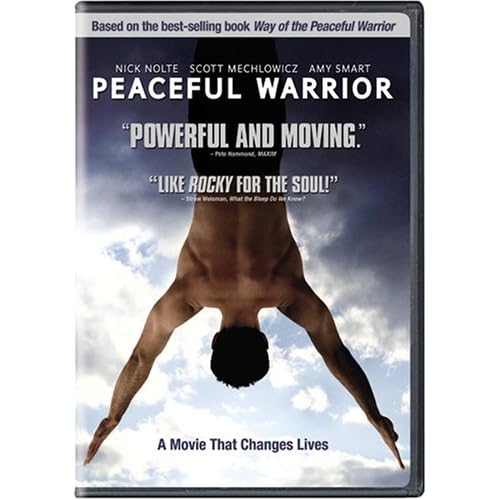
Check out The Peaceful Warrior


If you have not seen this movie yet, it's well worth your time. Showed it to a team or two and it really got their attention. Beware of the opening scene. There's lot of great messages about preparation, concentration and living in the moment. Most DVD rental stores should have it. Click on the image above or the link below to get the movie at Amazon. You can also check out trailers on youtube, but they don't do the movie any justice.

Peaceful Warrior at Amazon

Sunday, August 1, 2010

Hockey Player Communication


Communicating is a such a large piece of how we all interact in everyday life. There are many means to communicate from the obvious like talking, to the more subtle body language. Players often underestimate the importance of this part of playing the game. This post hopes to shed some light on the importance of this skill and thoughts on how to become a more effective communicator.

The game of hockey is played at such a high pace that players having timely and relevant information to aid in their decision making are far more likely to make successful choices. The previous comment should seem obvious, but how, you as a player, can provide this input, may not be so transparent. First off, you need to keep in mind that like all interaction between two people you are only as good as your word. i.e. Can you be trusted and are your comments helpful? To give you an example of breaking that trust, think of an immature player that is constantly hanging around the front of the net calling for passes, despite the fact that they're covered and passing to him or her would have little chance of creating a positive result. Pretty soon, that player's teammates, learn to tune that player out and opportunities to assist one another are lost.

The second part of quality communicating is developing a simple vocabulary that your teammates can understand and act on appropriately. Usually the smallest word that paints the biggest picture is most effective. Think of words like "back", "up", "boards", "middle" and my favorite "TIME". One of the benefits of using these simple words is that they can be quickly repeated to make sure your teammates are getting the info. The other piece of this is making sure all your teammates know what these words mean. On my teams we talked about "our playing words" and made sure our players used them in all our training.

Taking a look at my favorite term "time". Here's a great example of supporting your teammate when they are in a position that they might not have an opportunity to read the ice well enough to understand the room they have to get their head up and figure out their next option. This might occur when a player has to retrieve a puck along the boards and had to turn their back to the middle of the rink or where a player breaks loose from a one on one battle and is not sure if his opponent has another support defender closing in on them. Letting this player know they have the time to re-orientate themselves to the situation at hand can make a huge difference on what happens next.

On the opposite side of having time words like back, middle or boards assist players that are under heavy pressure and often don't have the chance to get their head up enough to read the best options. These times are where a quick command will bail not only that player out, but give you team a chance to maintain puck possession and continue to pressure your opponent in all areas of the ice. Naturally, the more the players not in possession of the puck and in close support can read the ice the better the directive calls will be. This reading of the ice will mature as the players game improve and this is a facet of the game players and coaches should constantly look to work on. At the younger ages where players are more likely to be limited on sensing what the options might be available it is a more challenging proposition, but starting out in small areas and have success there can be built on as their game grows.

Another piece of this skill is the ability to add subtleties to your messaging. There will be times where you must be very aggressive or loud with your communication, like when a player is about to be pressured in a dangerous area that would put your team or they themselves at a big disadvantage. Maybe a player not seeing a forechecker coming or a player receiving a breakout pass with their back to a pinching defenseman. Another example that is very critical is in the scoring zone. Here you need to be overly aggressive with your calls when you find yourself wide open in a scoring area in front of the goal. Nothing is more discouraging than losing a great scoring chance because a player either didn't communicate in this spot or did so in a manner that didn't send a message of urgency of getting that player the puck. Make sure you drive home the point when you find yourself that open in that area the people in the parking lot should hear you yelling.

Even more subtle is what I call the anti-communicate, communication. Maybe you find yourself in a great backdoor area that the defender between you and your teammate isn't aware of you and or the goalie hasn't noticed you either. A yell hear might be just the help either of these two opponents needs to select a better option for defending you. An option here might be a silent waving of your stick to your side with the hope your teammate can pick up your signal. Naturally the higher level of hockey being played demands the more subtle messaging to gain an advantage. However, even at the highest of levels a constant communication on even the most basic of plays is a must. I was blown away at a young age the first time I had a chance to sit down at ice level for an NHL game. The conversations that I had previously not noticed made me feel like I was in a control tower at an airport. Players were constantly directing traffic that it almost made you feel you were witnessing a pre-rehearsed stage play. These were the most skilled players in our game and they needed this direction. Seems to be a no-brainer that all the players at the levels below need them even more.

Sunday, June 27, 2010

Teaching Creativity


I'm not talking being more creative with uniforms. This team has more than covered that area. I'm talking about the question of it being possible to train players to be more creative, or is it, as some have suggested, a genetic gift ? From my perspective, like all skills we learn, both takes are factored in. However, the prejudice of genetics being a the largest determining factor in learning this part of the game, not learned skills, many coaches fail to believe they can improve players significantly in this area. This post is an attempt to convince you creative players can be built a lot easier than many believe.

For players the starting point is to study creative players. Try to notice the subtleties that make these players successful and then work at adding a skill set to pull these types of plays off. Next, experiment using them and with the help of your coach add them to your game play. Be proactive and share your ideas with your teammates and help them understand how and why adding creativity to their play can pay big dividends

For coaches, first of all, you must be committed to ingraining this into their player's training sessions. A determining factor here though, is that a coach lacking creativity in his or her view of the game will most likely not have the ability to effectively design sessions that will help players in this area. If that is a shortcoming, you'll need to reach out to others that have success in this area. They're usually not that hard to spot and most are more than willing to share their ideas. Second, coaches need to allow players the room to experiment with their creative play and make sure they reinforce a player when they have found a creative solution to a problem. Players also need to be taught where and when a creative play might be appropriate.

At the youth levels, creative play must play a huge role in player development and coaches should allow for a much larger latitude with allowing players to make mistakes with this skill development. Games at these levels should be used with a focus on development in all areas, rather being overly concerned with winning. Sure winning plays a role in player growth and being more aggressive to win critical games for your team has it's place, but if winning is your sole measuring gauge for success, players will be held back with long term development.

There are many training methods coaches can use to incorporate creativity into their sessions. Starting with having players adding to their skill sets both on and off the ice, drills that encourage creative play and ultimately implementing Tactical Awareness Games (TAGs) training to allow players to discover tactics that can be effective in zones all over the ice. A coach that is able to define numerous creative options that players might have in different situations and pointing these out with-in the TAGs environments can be very effective in shaping players to view the game with a much larger set of options. Coaches can also use video sessions of creative plays by professional, junior and college players to not only educate players, but hopefully create a higher enthusiasm level for implementing them. All these tools and many others are needed to build creativity, as team's defensive play has continued to play a larger and larger role in game results. Also, do not misinterpret training in this area as one that only looks to educate players on highlight reel type plays. There's also a need to focus on creative plays in high traffic areas, like the front of the goal or in the corners where aggressive one on one play often determines positive outcomes. However, educating players the need to widen their view of the ice and increase their awareness of what support players can add to effective play is critical. Increasing this awareness in many ways the single biggest factor why TAGs training can be so effective, both for individual and multi-player tactics. Again, the coach can play a significant role here if they can step in at critical moments of success or failure to break down where great or poor choices were made and why they worked or failed.

Needless to say, I do believe in a big way that creative players can be built and have had great success training players as numerous ages and abilities to add to their creative play. I also believe that using the TAGs model that breaks games down into situational play for specific tactics like cycling, breakouts, regroups dzone etc. is a critical piece. In all my practice sessions TAGs made up at least 50% of every practice. My teams might not of won a championship every year, but everyone of my teams had improved dramatically. If you empower your players with the freedom to experiment in these tactical games, players will make evolve into making better and better decisions. They also learn by having numerous repetitions of a specific tactic, and are allowed to watch numerous great and poor decisions, due to the nature of this environment. This is the fast-track to learn what does and doesn't work. To learn more about the TAGs model talked about above, take a look at an earlier post titled Tactical Awareness Games, Taking a Closer Look.

Saturday, June 26, 2010

Play your players


Been out of the posting mode for a number of months, as I've been working on getting my online apparel store (osvhockey.com) up and running to promote this site and with your help making an impact towards a better hockey experience. I'll be adding numerous posts in the future. Here's a topic that's very important.

The above commercial bought back memories of dealing with a fellow coach who was working with a poor town Pee-Wee team a number of years ago. He was trying to convince me that he was not playing a few players at all because in his words "they would rather be on the bench and win, than play and lose". I tried to convince him that nothing could be further from the truth, but it fell on deaf ears to the demise of all those players, many who simply decided to walk away from the game. He also was coaching his own son, who not surprisingly, was not one of those players watching instead of playing.

On the same subject, I was also was lucky enough to have a wonderful experience a few years back to participate in the USA Hockey summer development program and work with the 18-19 year old women's select tournament. Before we had a chance to coach the players, all participants that would work with USA players, that summer, had the luxury of attending a three day hockey seminar in Lake Placid N.Y. This seminar program had numerous presentations by college and professional coaches on approaches to best prepare the players for their summer experience and long term development. Needless to say the experience was tremendous.

After all the seminars, we all attended a "hot stove" like event with a select panel to toss around any idea that coaches thought might add to the discussion on any hockey topic. For those in love with the sport, this forum added great value to the entire weekend. Besides the panel, a number of coaches were asked to add their two cents about any topic that they thought might be relevant to discuss. Lou Vairo, the 1984 USA Men's Olympic coach, approached the group and added a prospective that most coaches needed to hear, from my perspective. He pointed out that many of the coaches in the room had enjoyed successful playing experiences and were usually the top players for most of their playing careers. He went out of his way to highlight many in attendance that had been great players in both youth and college then dropped the bomb.

He pointed out that as great as their past experiences were, those experiences had in numerous ways provided them zero perspective of what it was like to be on the other end of the talent scale. Vairo scolded the coaches for not understanding what it was like to be dismissed to a non-playing role and the sensitivity that most lacked with dealing with players that were banished to the end of the bench. He was more than direct that many coaches were doing the game and these players a great disservice by treating these players this way and that coaches needed to serve this group of players in far more productive manner. He pointed out that many games are far less meaningful in the long term than most coaches think and that their teams and these players would be much better served by participating than watching. He was especially critical of youth hockey coaches that in his words,"should step down" if they were not able to recognize the importance of treating all their players with dignity, being passionate to help them improve and by providing them with playing time. He also pointed out that players at all levels from pros and below need to play as well. He went on to point out that far to many coaches were driving players out of the sport, rather than developing a model were winning was less important than having all your players thrive in the game. Needless to say, I was excited to hear this presentation, as I believe that his view on this topic is far to often ignored. I'll also tell you that from first hand experience, many players that coaches might have driven out out of the sport with this mentality, have gone on to be very productive players by coaches that did not understood what Coach Vairo was stressing. Way to go Lou !!!!
This message, in no way, was trying to promote the idea that all players on all teams should have equal playing time. It is more about understanding the need to develop all your players and giving them all hope that they can be a contributing member of the team by playing them. On the positive side, finding ways to play your players will make your practices more spirited, you will be much more prepared, as a team, when more talented players fall to injury and have all your players be willing to go the extra mile towards success. Also aiding this front is having an open relationship with your less talented players and parents at the youth levels, explain ways they can improve and make sure you credit for making them. This attitude is a win-win for everyone, those players, the team and the coach.

Tuesday, February 9, 2010

Developing your Team Play


Had a chance to officiate a number of youth games over the weekend at a local tournament at the Midget, Bantam, PeeWee and Squirt level. It was great to see that the game has progressed in the sportsmanship side of things and the new rules have positively impacted the way the game is being played. Most players and teams by now have adapted to the not using their sticks for hooking and slashing and the hits are much cleaner than just a few years ago. However, on the hockey development side of things, it was pretty obvious we still have a long way to go. Of the 20 plus teams in this particular event there were about 3 teams that you might call well coached. It was disappointing to see such a low level of organized team play and coaches that were encouraging selfish play over teamwork. I attribute this mostly to coaches that have very little understanding of how the game should actually be played and even if they actually wanted to get their players to move the puck more have little sense on how to teach players where to go without the puck. With the above challenges I thought it would be worthwhile to make a list of tactics that coaches should look to incorporate into their team structure that would add to team play.

#1 Players must understand that the most important part of the game is moving the puck quickly. Far too often players think that when they get the puck it's me time. The head goes down and the stickhandling begins. This does not mean that they should wing the puck forward with the hope that someone on their team will pick it up. Rather it means move your feet to escape pressure, while at the same time get your head up and access the options you have. Carrying the puck yourself might actually be the best option, but mostly, that's not the case.

#2 Players without the puck must quickly make themself available for passing options and do so in a manner that is predictable to their teammates, use the entire width of the rink and in a manner that they can receive a pass. This means all players and especially defenseman, as the best option is often backwards away from pressure first, then forward.

#3 Players must understand that when going forward as a team they must push the puck ahead to open players who can receive a pass to make their attacks as aggressive and quick as possible. It is far easier to defend a team where one player gets the puck and tries to go coast to coast while his teammates slow down and let that player go pass them. That's about as smart as buying a Porsche and never taking it out of 2nd gear.

#4 The game in many senses, is a game of opposites. By that I mean if the puck is on one side of the rink the open ice is the opposite side. Often by first going backward to the puck side defenseman and then across to the weakside D you have not only moved the puck away from pressure, but also given your forwards the time to get open and also created easier diagonal passing options for the forwards to receive the next pass. This idea of opposites is also true all over the ice. When the puck is in the middle of the rink usually the best option is to the outside and vice versa or if the puck is down low in the offensive zone the best option is to move the puck up high. (I was blown away over the weekend when a Bantam coach blasted a player for making a smart D to D pass in the neutral zone because he thought that type of play was too dangerous. Needless to say this teams main tactic was the continuos blind passes into to skates up the strong side boards).

#5 Similar to the above tactic, use both D for most of your breakouts. There are times when one D can move the puck effectively by themselves to the forwards, but by not understanding how to move the puck from the strong side to the weakside with D to D passes or reverses it becomes pretty simple to forecheck a team that only uses one side of the ice. (Show me a team that always plants one D in front of the net on breakouts and you'll most likely be seeing the forwards standing around all over the ice instead of moving to open space) If you spend anytime on team tactics in practice, this is the one area that will pay the most dividends. The great bonus here is that you can use the exact same positioning for your neutral zone regrouping.

#6 The last tactic I'll mention here is one that is the easiest to implement, but in may ways the most important. When your team doesn't have the puck you must pressure your opponent as quickly as possible. Of course their are times when this is not possible or positionally would not make sense, but your team must understand that the easiest way to score goals is by creating turnovers and getting the puck to your opponents net before they can organize their defense. There have been numerous studies on goals and scoring created after turnovers and it statistically always far and away ranks first for goals created.

Rather than complicating this post anymore with additional ideas I'll leave it here, but keep in mind a practicing your Dzone coverage and a simple forecheck plan will also pay dividends. The great news is that you could teach these systems in a parking lot with walk thrus and not waste much needed ice time that can be better used for skating and skill development.

Thursday, January 21, 2010

What would John Wooden Do ?


One of the consistent characteristics of successful coaches is the ability of the coach to recognize adjustments individual players need to make and providing them with a plan to make those changes. The old saying "you are only strong as your weakest link" is one you hear often, but one that needs to be also narrowed down to evaluate individual players, as well as, the team as a whole. As your team and individual players continually chip away at eliminating flaws in their games your chances for increased success are greatly enhanced. The term increased success was used in place of winning as the value of winning is one that is often misunderstood at numerous playing levels.

No coach enters a game with the mentality of not playing to win, but balancing the level of commitment to winning and the level of developing is what separates the the great coach for the less talented. At the youth levels the coach that puts more weight on winning than developing is one that usually holds back the advancement potential for all their athletes. Even at the higher levels of play, a coach will be presented will numerous situations where they will have opportunities to make long term development decisions that impact the team for the positive in the long run, but might not be in the best interest of winning at that moment. An example of this might be playing a particular player in a situation that they are attempting to grow into over a player who may already the ability to be successful in that setting. This decision might backfire and cost the team a victory today (although the difference between the stronger and less talented player in most of these situations on most teams is usually very small and usually has little bearing on success) but the long term development of that player and the entire team can be significant if the coach manages this situation effectively. Do not equate the above with placing an unqualified player in a situation where they have little chance to be successful with the hopes they will magically learn to play at a much higher level.

The second significant opportunity a coach has to maximize growth is to give players the license to make mistakes. Again this mentality is much more important at the early development stages than that of the advanced levels of play. But even at the higher levels a coach that can process a mistake by a player in a positive and constructive manner is much more likely to have a player make a better decision the next time they are faced with a similar situation. Contrast that with a coach that berates the player for making a mistake and not taking the time to process the situation with the player or make a plan for improvement in that area. Why would anyone be surprised that the first coach having a much better chance to impact the player in a positive manner. The real tragedy of the second coaches tact is that the reason many of them berate the player is that they often don't have the tools to make the positive plan for the player and mask this with an emotional response rather than doing nothing, or are so emotionally tied into winning or losing being the lone measuring tool for success that they fail to recognize the great teachable moments that mistakes present.

One of the greatest coaches of all time had a great saying that speaks to the license to make mistakes idea was the legendary basketball coach of UCLA, John Wooden. One of Coach Wooden's core beliefs was that "the team that makes the most mistakes eventually wins". How could this possibly be true if he also didn't allow his players to make mistakes and also have the skills to both identify them and then take the steps to correct them. In fact he did and labeled these opportunities positive corrections. Coaches are faced with numerous challenges and must wear many hats. They are continually presented with opportunities to impact positive changes for their players both as players and as a young maturing individuals. One consistent characteristic that always seems to be present in the coaches that are the most effective in this charge, is the ability to communicate with their players in an environment of mutual trust in a constructive manner.

Monday, January 18, 2010

Some observations after the weekend


Had a chance to go to a number of college and youth games over the weekend. The college game was a chance to see a team making the transition from having the best player in the league the past couple of years, to learning to play without that player. The interesting thing about this team was that despite losing this top end talent, in the grand scheme of things, they were actually a better team and much more dangerous. This is not the first time to see this occur and it's not that uncommon. What are some of the things we can learn from this situation?

First off, there are real challenges to coaching a team with a player that is at a higher level than their peers. In the perfect environment, the top end player has a high level of understanding the importance of playing a team game and making all the players around them better. At the same time that talented player must also gain an understanding a when to recognize they have an advantage over an opponent and should take them on individually. It's a difficult balancing act for both the coach and player and one that requires a lot of interaction between the coach and player.
The next challenge is to not to have the other players on the team stand back and allow the top player take over a game on their own. This is all the more difficult when the star player is simply faster than all those around them. The goal here is to work at ways to add speed to all your players and making sure the star understands that they must move the puck up ice quickly to open teammates to keep the speed of play at a high level for everyone. When they start to learn that joining a play as a late attacker can be just as dangerous as the first wave of attack they begin to comprehend the game at a much higher level.

In the college game it was very obvious right from the start that not having the top player meant they had to rely much more on a collective approach vs a much more individualistic one. What really stood out though was the emergence of much faster and creative play off the puck, as well as, a much better level of puck movement. The crispness of their passing was great to witness and the dangers they presented to their opponent with this style of play had increased dramatically. In the end they are a much better team without their star and their scores and record to date reflect that in a big way. They also seem to be a much tighter and close knit team which should serve them well in playoff hockey which requires a strong collective effort. Should be interesting to see how they make out in that phase of the season.

Every team is a different challenge to bring out their best and having a great talent on your team can be both a blessing and a difficult hurdle. One thing is for certain though, if you don't have a plan on how to maximize the growth for all your players, many will get left behind. At the youth levels, unfortunately far to many coaches allow the star to have no guidelines and consider winning over development a higher priority. A detriment to both the star player and their teammates.

Sunday, January 3, 2010

Solving Problems ???


Every coach runs into officiating that is not up to speed or is simply over their head. The more you are around the game the more you realize that there will always be a number of games each season that you'll walk away with the feeling that the officials had a bigger role in deciding the game than anyone would have preferred. Usually though these things tend to balance out and with every call that seems to go against your team, there tends to be a similar number that goes against your opponent. Of course the bigger or more important the game, the more everyone hopes that the officials role will be one that they are not the story and the players will be the deciding factor in the outcome. That is usually the hope of the officials as well, but sometimes the officials are placed into a situation where they must play a bigger role than anyone was hoping for. With all that said, this post has nothing to do with officiating and everything to do with the coaches role in dealing with infractions by their players.

A number of year ago USA Hockey had a seminar for coaches with a presenters from various upper levels of the game. They had NHL coaches, NCAA coaches and Junior Hockey coaches presenting on various topics about the sport. Jack Parker, the long time BU head coach was was one of the latter coaches to address the coaches forum. He first talked about his topic, problem solving. He admitted that he really had no specific direction on where to take this topic, but he figured out an angle that might be useful for coaches from the youth levels, which was the majority of the attendees. His idea for solving problems zeroed in on problem players and how to deal with them. This article was started with a quick take on dealing with officiating and was done so to relate to Coach Parkers presentation. He first talked about a couple of similar takes, like the above, on officiating and then related those to appropriate ways he felt that coaches need to deal with their players that went above and beyond the role of the officials. He openly admitted, to no ones surprise, that officials will make mistakes and more importantly will miss infractions, especially by players that try to take liberties away from the puck. Most of his presentation was about one of his former players and he was very candid in admitting that the player was not only a high scoring forward, but a player that had the mentality of abusing as many of his opponents as possible. As much as this player enjoyed winning the game or scoring a goal he took equal pride with how much he could get away with.

Coach Parker quickly realized the need to redirect this players focus and had many discussions with the player that seemed to
help, but he still felt the player was not getting the bigger picture. During one of the games early in his players career one of his assistant coaches told coach Parker he had overheard the problem player bragging to a teammate that he had speared an opponent while backchecking, which the officials never saw. Coach Parker was furious and spent numerous hours looking at the game tapes to try to find it. He never did find the infraction, but felt he needed to step up the pressure on this player if he was ever to get the message. The next day he brought him into the office and told him while watching the tapes the night before he witnessed the player spearing a BC player, behind the play. The player admitted to the action and coach Parker suspended him for a game, the penalty the player would have served if the officials had seen it.

The obvious questions are, how many coaches are willing to wait for the officials to police there players, when in fact they know their players need their direction instead. How many games have you witnessed where the officials have missed a serious infraction where you know the coaches saw it and done nothing about it. How many times have you witnessed players who are acting in troubling ways both on and off the ice, which the coaches are aware of, but decide not to step in with appropriate discipline. Maybe equally distressing, how many times have you witnessed top players allowed a much wider berth with inappropriate behavior than players on the lower levels of the ability level. At any level, can these actions possibly serve the player or team to buy into a a standard of discipline that will allow them all to grow as individuals and a team. Players, like all of us, are pretty perceptive to what is allowed and what isn't. And like all of us, when the standards are lowered, we all usually gravitate to the new level of expectations.

Coach Parker is a great example of one person that would lower his expectations. How could his example raise the bar for so many other players and teams ?????